Ferragamo Leather Day Bag Ferragamo New Arrivals
Ferragamo Bag Design’s Transformation Through the Generations
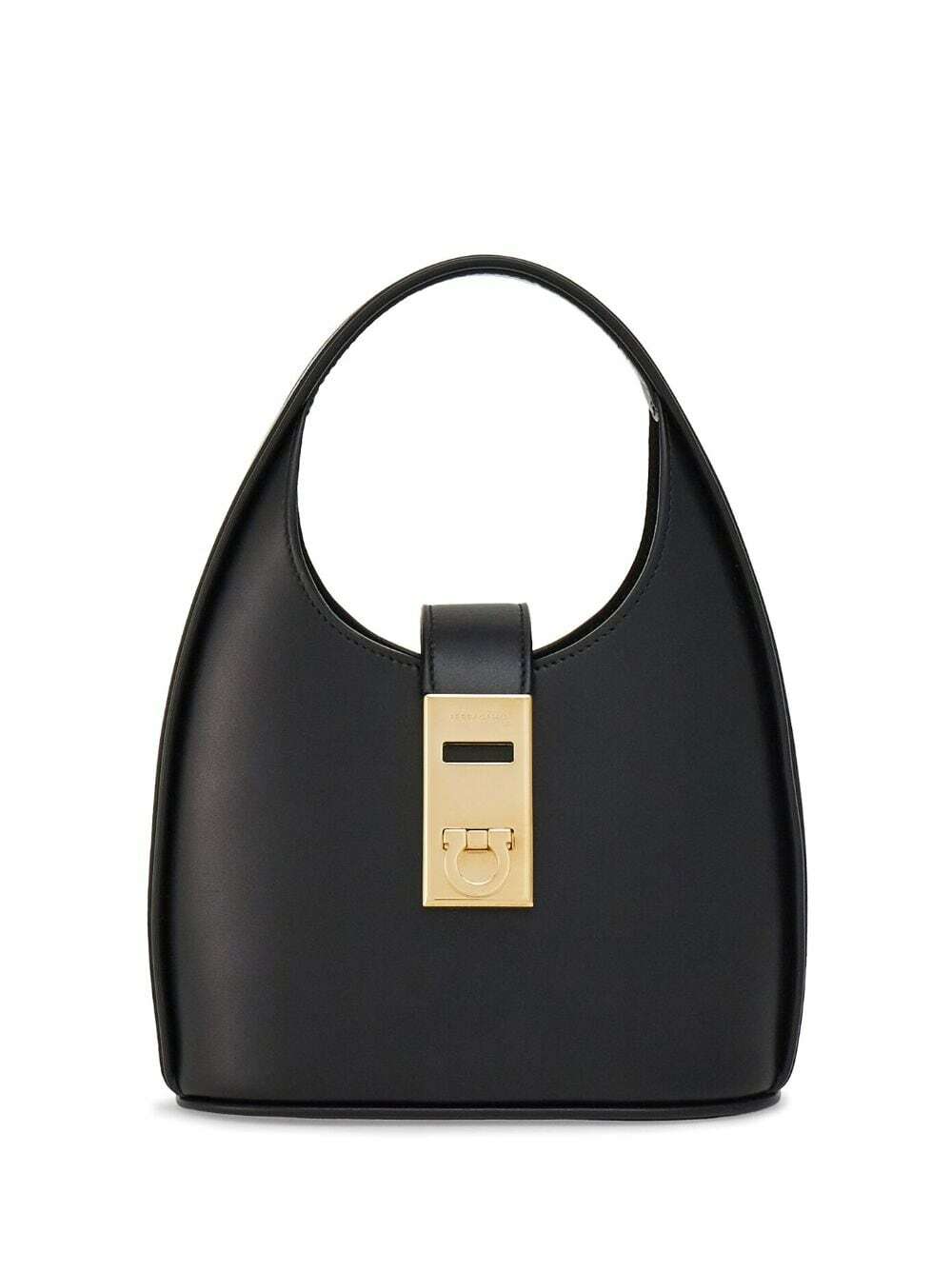
Salvatore Ferragamo constructed his renown on shoes years before handbags appeared on the scene, but the house’s philosophy behind bag design preserves the same preoccupations that made him famous: anatomy, balance, and construction that accounts for how someone genuinely navigates through a day. Tracing the evolution of the Ferragamo bag means following shifts in how women labored, moved about, and styled themselves across nearly a century. This is not merely a timeline of shapes and hardware. It chronicles how a Florentine workshop adapted to changing lives while never abandoning its own artisanal principles. Anyone browsing a Ferragamo store today encounters the gathered fruit of decades of small, deliberate adjustments rather than abrupt overhauls.
What renders this development worthy of examination is the self-control behind it. Many luxury houses chase trend cycles aggressively, introducing and discontinuing silhouettes within one or two seasons. Ferragamo bags have traditionally evolved at a slower pace, prioritizing structural polish above newness. Such patience is reflected in designs still cited by design teams now, decades following their initial launch. It also clarifies why vintage Salvatore Ferragamo bags stay sought-after instead of feeling outdated.
The 1940s through the 1960s: The Groundwork Years
Bags became a meaningful part of the Salvatore Ferragamo house over the decades that followed after he opened his Florence atelier in 1927, growing out of the same leather mastery applied to footwear.
During the 1940s and 1950s, the brand’s earliest handbags were compact and structured, centered on a solitary prominent handle or fastening that reflected the postwar preference for practicality over ornamentation.
Frame bags with rigid metal closures were common, echoing the era’s formalwear silhouettes.
Across its transatlantic clientele who demanded quality on par with couture-level shoes, the maison had, by the 1950s, ferragamo sale established a solid reputation. Hide selection was at that point a source of pride, with bark-tanned hides sourced by way of tanneries in Tuscany that Ferragamo kept close ties to. This is a detail that still matters: a great many of today’s Salvatore Ferragamo bags can trace their approach to sourcing leather to these same regional supply chains.
Strict tailoring began to relax, and that decade introduced more fluid contours accordingly.
The earliest genuine style divide in the collection was signaled when relaxed, hobo-style shapes began emerging beside the structured frame bags.
A dual design language — firm versus soft — had its seed planted in this period, a divide that the brand has revisited again and again ever since.
Across the 1970s and 1980s: Signature Hardware alongside Confident Identity
Throughout the 1970s nudged Ferragamo bags toward more pronounced brand identity cues. Gold-toned fittings, the Gancini clasp, and exposed metal hardware turned into defining design elements rather than incidental touches. Originating on footwear before crossing over to bags, the Gancini remains one of the most iconic hardware elements within the ferragamo bags range today.
When fashion gave itself over to maximalism through the 1980s, bag scale swelled. With standout Gancini clasps, architectural totes and structured top-handle styles turned into a status marker across Milan, Rome, and New York alike. This period cemented the idea that the Ferragamo bag was an instantly identifiable object, not simply a practical accessory; you could spot it from the far side of a room by its hardware outline alone.
It’s worth noting that this era also expanded the brand’s international retail footprint significantly, with boutiques opening across the US and Asia. That expansion meant bag design had to satisfy a wider range of climates, dress codes, and carrying habits, which nudged the house toward more versatile sizing than the rigid, single-purpose bags of the 1950s.
The 1990s and 2000s: Simplicity Meets Utility
The 1990s ushered in a pronounced stylistic correction. Runways were dominated by pared-back tailoring, and bag design followed suit. While the Gancini held on, simply turning smaller and more discreet on numerous designs, the house had already answered the shift through purer silhouettes, sleeker leathers, and more restrained hardware.
The 2000s saw the introduction of more overtly structured top-handle bags aimed at a professional, jet-setting clientele. This is arguably when the modern template for what shoppers now search as “best ferragamo bags” started taking shape: mid-size, structured, with a clear hardware signature and enough versatility to move between office and evening use. Craftsmanship details like hand-stitched edges and reinforced base panels became standard rather than exceptional.
Meaningful expansion occurred in leather variety over this stretch. Saffiano-textured leather options, smooth calfskin, and suede variants all came into circulation, granting the same silhouette multiple lives based on the finish chosen. Some 2000s-born silhouettes have held up well enough to keep appearing, reworked for today, in today’s lineups—a direct result of this flexibility.
The It-Bag Strategy’s Climb to Prominence: Inside the 2010s
The 2010s signaled the house’s most intentional foray toward the “it-bag marketplace” that labels like Chanel and Céline had already proven a commercial success. Signature bag lines refreshed each season became standard practice, providing regular clientele with an annual incentive to return to the Ferragamo shop rather than approaching a bag as a once-only purchase.
This era also saw color develop into a bolder design tool. In contrast to when earlier decades depended largely on black, cognac, and neutral tones, 2010s Ferragamo bags introduced saturated seasonal colorways — reds, cobalt blues, and pastels — commonly set against the same structured silhouettes that had defined earlier decades. The Gancini clasp came back in bolder forms, now and then scaled up until it functioned as the bag’s central feature instead of remaining a quiet accent.
The label’s runway-to-retail pipeline became more refined via collaboration with contemporary creative direction. Runway pieces started arriving in stores more quickly, echoing wider industry demands to narrow the gap between design and commercial availability.
From the 2020s Through 2026: Structure, Sustainable Practice, and the Revival of the Archive
As 2026 approaches, Ferragamo’s bag design language sits at an intriguing intersection: archive revival meets contemporary material responsibility. Several current lines borrow silhouette cues directly from 1950s and 1970s frame bags, reissued with updated proportions suited to how people actually carry belongings now — phones, cards, minimal daily essentials rather than bulky wallets and compacts.
Material sourcing has equally emerged as a explicit priority, alongside increased use of traceable leather and more transparent supply chain communication relative to earlier decades. It isn’t a complete overhaul of manufacturing, though it does capture an broad industry expectation that luxury buyers in 2026 expect clearer detail about where their salvatore ferragamo bags actually come from.
The Gancini remains a constant thread across new releases, appearing in matte, polished, and oversized variations depending on the line. Strategically, this consistency gives new customers an easy way into the brand’s identity, and at the same time giving longtime buyers something familiar across bag shapes that are otherwise quite distinct.
Design Eras Side by Side
| Decade | Leading Shape | Defining Feature | Everyday Purpose |
|---|---|---|---|
| 1940s–1950s | Structured frame bags | Rigid metal clasp | Formal day attire |
| 1960s | Loose hobo forms | Minimal hardware | Casual daytime use |
| 1970s–1980s | Structured totes with top-handles | Bold Gancini clasp | Signaling social standing |
| 1990s–2000s | Streamlined structured bags | Subtle hardware | Versatile professional use |
| 2010s | Named it-bag lines | Sculptural, enlarged Gancini | Statement pieces per season |
| 2020s–2026 | Archive-driven relaunches | Traceable hides with varied Gancini finishes | Pared-down everyday use |
Why This History Matters to Today’s Shoppers
Why a Ferragamo bags overview rarely fits into a single style category becomes clearer once this evolution is understood. Structured heritage shapes, minimalist 2000s carryovers, and bold 2010s statement pieces frequently coexist within the catalog. This breadth stands as a direct result of decades of layered design decisions rather than a single unified aesthetic imposed top-down.
When sizing up alternatives, it pays to think in terms of decade-specific identity rather than just current trend. The house’s earliest formal work is echoed in a structured frame bag. Leaning into the bold 2010s statement era, a bag with an oversized Gancini makes a striking impact. The 1990s minimalist correction shows up in a tote that keeps things clean and low on hardware. Recognizing these lineages makes it easier to identify which era’s design philosophy actually suits daily habits.
In the end, whether one is on the lookout for the top-rated Ferragamo bags suited to workwear or sizing up the best Ferragamo bags for nighttime events, deciding is made easier through this contextual history. A house doesn’t maintain near 100 years of relevance purely through hardware. It achieves this by constantly rebalancing the balance between structure and ease — the identical push-and-pull Salvatore Ferragamo started when he first redirected his craft from shoes to bags, and a pursuit the house keeps sharpening with each new collection put out under the Ferragamo name in the present day.
