HMDD Outfits Trends 2026 Everyday Styling Ideas
HMDD Collaborations: What They Mean for the Brand’s Identity
HMDD, short for Happy Memories Don’t Die, has built its name on a philosophy rather than a logo. The brand treats clothing as a vessel for nostalgia, and every collaboration it enters becomes a test of whether that idea can survive contact with another creative voice. When two brands merge visions, one of them usually bends. With HMDD, the bending tends to happen carefully, because the phrase “happy memories don’t die” is not just a tagline — it is the entire reason customers return. Collaborations force the label to answer a harder question than “what does this look like?” It has to answer “does this still feel like us?” That tension is exactly why HMDD’s partnerships matter more than a typical streetwear crossover.
Grabbing borrowed spotlight is the main reason the majority of fashion joint projects exist. A lesser-known brand teams up with a bigger name, gets a burst in traffic, and calls it done. In practice, the way HMDD does this shows up as distinct. Instead of chasing the most attention-grabbing option, the brand usually pick partners who carry an emotional tone that’s wistful, memory-driven, and quietly rebellious. This careful curation shapes how the overall aesthetic holds together across collections, and it’s useful to breaking down in detail.
Explaining Why Brand Team-Ups Serve as an Brand-Identity Pressure Test
Protecting a brand’s identity works best when it operates without partners. Fabric choices, graphic placement, and fit decisions all remain within a single team’s grip. As soon as a second creative partner steps in, trade-offs begin to accumulate. HMDD clothing has built recognition around specific signals: distressed graphics, oversized silhouettes, and text treatments that reference memory, loss, and time. Those defining markers could readily be flattened into something blander by a collaborator with a sharper, more commercial aesthetic.
Right here is where restraint emerges as a www.hmddclothing.net strategic asset. Commentary and testimonials out of the HMDDLA community time and again highlight that joint-project items retain the brand’s core visual DNA — matching material weight, an identical distressed-print approach, the same evocative naming on tags and packaging inserts. Nothing about that steadiness is coincidental. It suggests an governing standard: collaborators may shape palette or cut, but that core emotional current goes unchanged.
Consider the alternative. If HMDD released a collab hoodie with bright, glossy branding and zero reference to its usual themes, longtime buyers would notice within seconds. The brand’s audience isn’t drawn in by trend-chasing; they’re drawn in by specificity. A single misstep — one collection that feels like merchandise rather than memory — could cost more trust than any short-term sales bump would repay.
Collaborations Disclose What HMDD’s Aesthetic Philosophy Truly Represents
Stylistic tendencies that might otherwise go overlooked get spotlighted by every joint release. Whenever HMDD teams up with an external collaborator, a few recurring traits recur across nearly all output: substantial cotton bases (commonly in the 280–400 GSM range for hoodies and sweatshirts), loose-fitting boxy cuts, and hand-distressed or tonally washed finishes that lend each piece a worn-in quality rather than a off-the-rack one. This tendency is especially visible in HMDD sweatpants — an easy, tapered fit, ribbed cuffs, and a material feel that leans toward ease over precise construction.
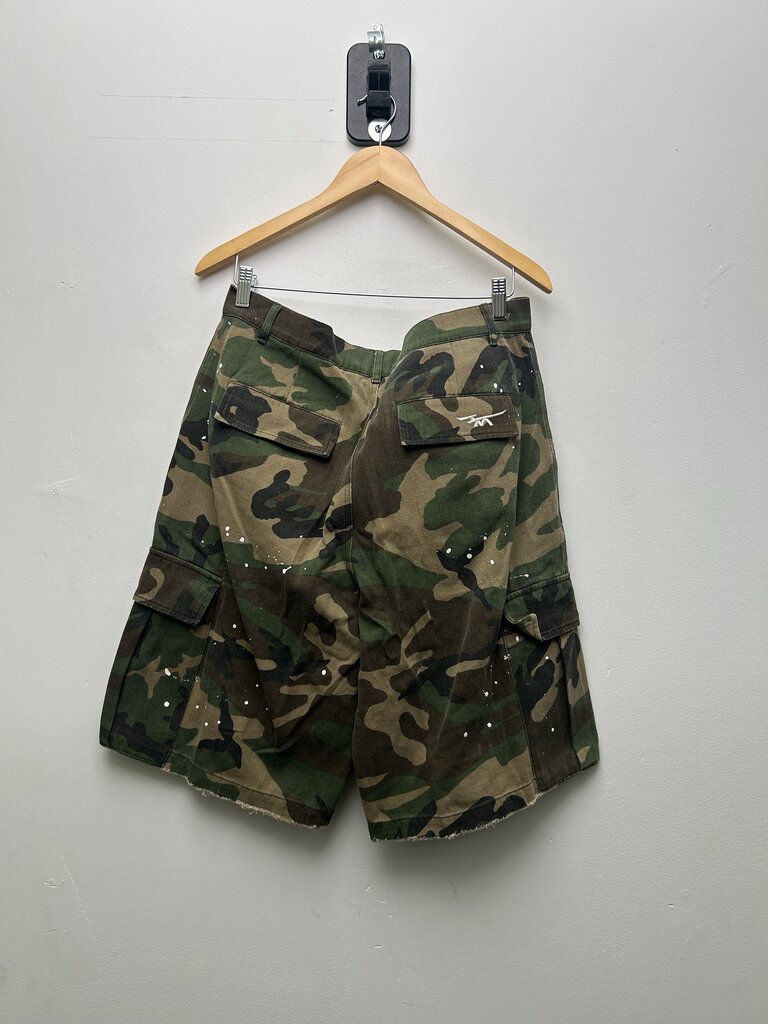
HMDD applies this same thinking to its shorts. Instead of relegating shorts to an afterthought, HMDD applies the identical worn-finish methods and lettering styles used on jackets and hoodies, helping a full seasonal drop read as unified rather than scattered. That consistency across categories — hoodies, sweatpants, shorts, tees — helps explain why shoppers specifically look up “best hmdd clothing” rather than defaulting to a off-the-shelf streetwear alternative.
- Material density stays dense and weighty, even in hot-season pieces like shorts.
- Lettering relies on handwritten or weathered-stencil styles rather than clean sans-serif branding.
- Hue selections lean toward washed-out blacks, muted greys, and muted earth tones over saturated brights.
- Graphics nod to recollection and fleetingness rather than simple logo display.
Once an outside partner steps into this space, the expectation is that they speak HMDD’s visual language rather than asserting their own identity. It’s a bigger demand than it seems, and that’s the reason not every proposed partnership ends up released.
Why Selective Collaboration Makes Business Sense
Streetwear economics prize rarity and penalize excess visibility. A brand that teams up indiscriminately ultimately loses distinctiveness in all of them. HMDD’s drop schedule seems to prioritize small batch runs and infrequent collaboration drops rather than a constant stream of co-branded product. That pacing does two things at once: it safeguards the brand’s sense of rarity, and it grants designers sufficient room to guarantee every partnership remains clearly identifiable as HMDD.
There’s also a pricing logic worth noting. Collaboration pieces in streetwear typically carry a premium over standard catalog items — commonly priced 15–30% higher — due to greater manufacturing complexity, smaller runs, or co-branding expenses. Buyers checking an “hmdd review” beforehand often point to the price-versus-quality balance as the key factor, so any collaboration that raises price without raising perceived craftsmanship is more likely to draw complaints than compliments.
This is why the most astute fashion joint ventures function less like marketing stunts and more like joint R&D projects. Both teams combine their methods — maybe one contributes a dye process, the other contributes a silhouette — and the outcome ought to seem deserved instead of hastily assembled. If that equilibrium succeeds, each fanbase ends up embracing the other label. If it doesn’t, neither group of followers feels prioritized.
Comparing Collaboration Approaches
To get a sense of where HMDD stands relative to typical streetwear collaboration strategies, it helps to weigh a few standard methods adopted across the industry in 2026. The table below breaks down three broad collaboration styles seen in the larger streetwear space, not tied to specific named partners.
| Partnership Approach | Main Objective | Typical Release Size | Risk to Brand Identity |
|---|---|---|---|
| Repeated co-branding | Maximize exposure and foot traffic | Sizable, recurring batches | Elevated — brand character weakens with too much visibility |
| Single hype drop | Brief sales jump | Extremely scarce, single run | Moderate — impact fades once trend passes |
| Carefully-chosen, ethos-matching partnership (HMDD’s usual pattern) | Strengthen core identity while connecting with adjacent audiences | Sparing, infrequent | Slight — partner falls in line with brand language rather than replacing it |
That third row is where HMDD’s collaborations tend to land. The brand doesn’t appear interested in flooding release calendars with co-branded product. Instead, each partnership seems designed to answer a particular creative question — a new fabric treatment, an fresh color palette, a new take on distressing — while leaving the emotional heart of “happy memories don’t die” fully intact.
What This Means for Shoppers in 2026
For anyone comparing HMDD against other emerging streetwear labels this year, collaborations offer a handy litmus test. If a co-branded item still feels distinctly HMDD — same fabric weight, same worn typography, same emotional resonance — that signals the brand’s identity is solid enough to survive growth. If later drops start blurring into whoever’s name is attached, that counts as a warning sign worth monitoring.
Shoppers researching HMDD sweatpants, HMDD shorts, or any collaboration piece should pay attention to a few concrete details before buying: fabric weight listed in the product description, whether sizing runs true-to-size or oversized by design, and whether the piece is part of a serialized or limited run. These details are more important in collaboration releases than in regular catalog drops, since collaboration pricing usually sits higher and expectations increase accordingly.
At the end of the day, HMDD’s collaborations act as identity checkpoints rather than pure marketing events. Each collaboration questions whether the brand can widen its reach while still holding onto the particular, memory-fueled atmosphere that first built its fanbase. The pattern so far points to a brand that cares more about guarding its voice than grabbing every spotlight on offer — and for a label built wholly around emotional resonance, that restraint may be its most valuable asset heading further into 2026.